
Loading...

Current Affairs

IMD Unveils Initiatives to Monitor Weather to Mark its 150th Year
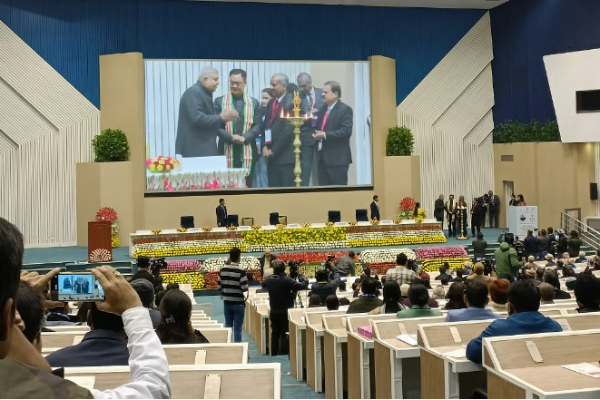
To commemorate its 150th anniversary, the India Meteorological Department (IMD) has launched the National Framework for Climate Services (NFCS) to enhance the d... To commemorate its 150th anniversary, the India Meteorological Department (IMD) has launched the National Framework for Climate Services (NFCS) to enhance the delivery and utilization of climate services. The NFCS prioritizes disaster risk reduction, water resources, health, energy, agriculture, and food security. The Panchayat Weather Service is a significant initiative under NFCS, providing customized weather forecasts and warnings to every panchayat in India, aiding farmers and disaster management. A national mobile app, including the "mausamgram" platform, offers hyperlocal weather updates, and the Decision Support System provides real-time weather and climate data to various sectors, enabling informed decision-making for urban planning, agriculture, tourism, and more. These initiatives aim to leverage the latest science and technology to monitor and predict extreme weather for the benefit of critical sectors in India.
CSIR-CRRI's REJUPAVE Technology Deployed in Arunachal Pradesh
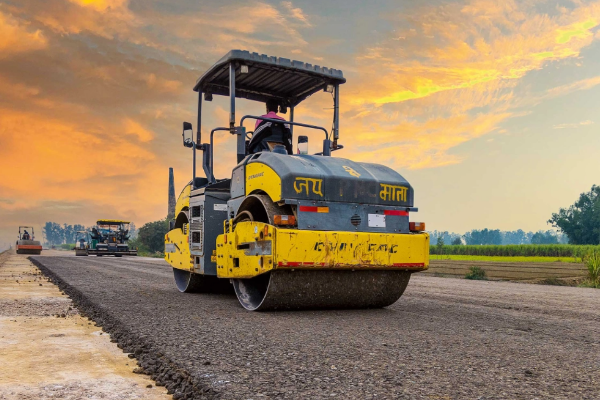
India's premier road construction agency, Border Roads Organization (BRO) has utilized an indigenous road construction technology called "REJUPAVE" developed by... India's premier road construction agency, Border Roads Organization (BRO) has utilized an indigenous road construction technology called "REJUPAVE" developed by CSIR-Central Road Research Institute (CSIR-CRRI), part of the Ministry of Science and Technology. REJUPAVE allows the construction of high-altitude bituminous roads under low and sub-zero temperatures. This innovative technology was recently implemented by BRO to construct parts of the world's highest Sela Road Tunnel and the LGG-Damteng-Yangste (LDY) road near the China border in Arunachal Pradesh.
IIT Bombay Develops Equipment for Plastic Waste Recycling
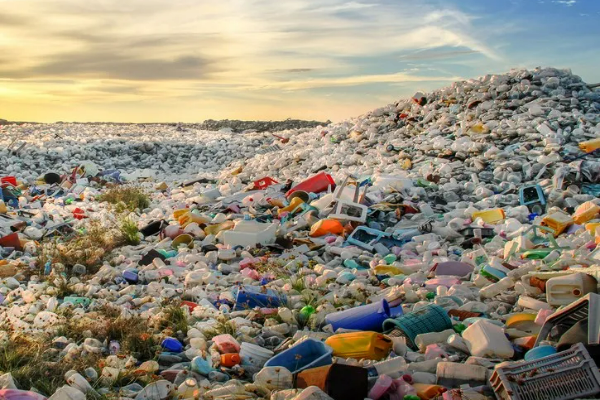
Researchers at IIT Bombay have developed an instrument named GolDN for mechanically recycling waste plastic polymers through melt-mixing. This indigenous single... Researchers at IIT Bombay have developed an instrument named GolDN for mechanically recycling waste plastic polymers through melt-mixing. This indigenous single screw extruder can manufacture composites from thermoplastic waste that can be molded into materials like paver blocks, tiles, and bricks. Commercially available melt-mixing equipment is unsuitable for recycling waste polymers containing contaminants. Their barrel and screw systems lack robustness. GolDN overcomes these limitations via customized design. GolDN facilitates efficient continuous melt-mixing of waste thermoplastics and inorganic fillers under lab conditions replicating real-world recycling.